(732) 577-1100
CSIA-CERTIFIED CHIMNEY INSPECTORS
CSIA-CERTIFIED CHIMNEY INSPECTORS
Professional Chimney Inspections in Central NJ
Professional Chimney Inspections in Central Jersey, NJ
Get clear, professional answers about the condition of your chimney, fireplace, flue, and accessible venting components. We provide chimney inspections for annual maintenance, home sales, appliance changes, suspected damage, insurance requests, and other residential needs throughout Central Jersey.
Level 1 and Level 2 chimney inspections
Camera and video scanning when included in the inspection scope
Serving Central Jersey since 1996
Fully licensed and insured
Request a Chimney Inspection
CSIA-CERTIFIED INSPECTORS
SERVING CENTRAL JERSEY SINCE 1996
FULLY LICENSED & INSURED
CSIA-CERTIFIED INSPECTORS
SERVING CENTRAL JERSEY SINCE 1996
FULLY LICENSED & INSURED
CSIA-CERTIFIED INSPECTORS
SERVING CENTRAL JERSEY SINCE 1996
FULLY LICENSED & INSURED
Understand What Is Happening Inside Your Chimney
Understand What Is Happening Inside Your Chimney
A chimney can look fine from the fireplace or from the ground while deterioration, obstructions, venting concerns, water damage, or other problems are developing elsewhere in the system.
A professional chimney inspection evaluates the portions of the chimney, fireplace, flue, and connected components included in the selected inspection level. The purpose is to identify observable conditions, explain what they mean, and help you make an informed decision about using, maintaining, repairing, buying, or selling the property.
Central Jersey Masonry & Chimney Sweeps provides professional chimney inspections for homeowners, home buyers and sellers, real estate professionals, property managers, and residential property owners throughout Central Jersey.
What is a Chimney Inspection?
A chimney inspection is a professional evaluation of a chimney, fireplace, flue, and accessible venting components. The inspector looks for damage, deterioration, obstructions, combustible deposits, water entry, improper clearances, and other conditions that may affect the system’s condition or use.
The appropriate inspection level depends on whether the system is unchanged, the property is being transferred, an appliance is changing, or damage is suspected.
What is a Chimney Inspection?
A chimney inspection is a professional evaluation of a chimney, fireplace, flue, and accessible venting components. The inspector looks for damage, deterioration, obstructions, combustible deposits, water entry, improper clearances, and other conditions that may affect the system’s condition or use.
The appropriate inspection level depends on whether the system is unchanged, the property is being transferred, an appliance is changing, or damage is suspected.
Which Level of Chimney Inspection Do You Need?
Which Level of Chimney Inspection Do You Need?
NFPA 211 recognizes three levels of chimney inspection. The correct level is determined by the condition of the system, how it is being used, what has changed, and why the inspection is being requested.
A higher level does not simply mean a better package. It means a different scope is needed because of the property’s history, condition, or planned use.
Level 1 Chimney Inspection
A Level 1 inspection is generally appropriate for routine annual evaluations when the chimney and connected appliance will continue to be used in the same way and no significant changes or problems are suspected.
It covers the readily accessible portions of the chimney, fireplace, venting system, and connected appliance included within the Level 1 scope.
Often appropriate for:
Routine annual chimney evaluations
A system that has not changed
Regular maintenance
Continued use of the same appliance
Situations where no damage or malfunction is suspected
Level 1 Chimney Inspection
A Level 1 inspection is generally appropriate for routine annual evaluations when the chimney and connected appliance will continue to be used in the same way and no significant changes or problems are suspected.
It covers the readily accessible portions of the chimney, fireplace, venting system, and connected appliance included within the Level 1 scope.
Often appropriate for:
Routine annual chimney evaluations
A system that has not changed
Regular maintenance
Continued use of the same appliance
Situations where no damage or malfunction is suspected
Level 2 Chimney Inspection
A Level 2 inspection includes the Level 1 scope plus additional accessible portions of the system. It also includes video scanning, or a similar inspection method, of the chimney interior when accessible.
The inspection may include accessible portions of attics, basements, crawl spaces, rooftop areas, and other areas included within the Level 2 scope.
Common reasons for a Level 2 inspection:
A home is being sold or transferred
The appliance is changing
A new chimney liner will be installed
There has been a chimney fire or building fire
Severe weather or another event may have caused damage
The system has malfunctioned
A Level 1 inspection cannot provide enough information
Level 2 Chimney Inspection
A Level 2 inspection includes the Level 1 scope plus additional accessible portions of the system. It also includes video scanning, or a similar inspection method, of the chimney interior when accessible.
The inspection may include accessible portions of attics, basements, crawl spaces, rooftop areas, and other areas included within the Level 2 scope.
Common reasons for a Level 2 inspection:
A home is being sold or transferred
The appliance is changing
A new chimney liner will be installed
There has been a chimney fire or building fire
Severe weather or another event may have caused damage
The system has malfunctioned
A Level 1 inspection cannot provide enough information
Level 3 Chimney Inspection
A Level 3 inspection may be appropriate when a Level 1 or Level 2 inspection indicates a possible hidden hazard and access to concealed areas is needed to evaluate it.
This level may require the removal of selected building materials, components, or finishes. The proposed scope and access should be discussed with the property owner before invasive work is performed.
Level 3 Chimney Inspection
A Level 3 inspection may be appropriate when a Level 1 or Level 2 inspection indicates a possible hidden hazard and access to concealed areas is needed to evaluate it.
This level may require the removal of selected building materials, components, or finishes. The proposed scope and access should be discussed with the property owner before invasive work is performed.
Not Sure Which Inspection You Need?
Tell us whether anything has changed with the property, chimney or furnace. Our team can help you schedule the appropriate service.
What May Be Evaluated During a Chimney Inspection?
The exact scope depends on the inspection level, fireplace or appliance type, system configuration, accessibility, weather, roof conditions, and safety considerations. Depending on those factors, an inspection may evaluate:
Firebox and visible fireplace components
Damper and accessible smoke chamber areas
Chimney flue and liner
Accessible portions of the chimney structure
Chimney crown or wash
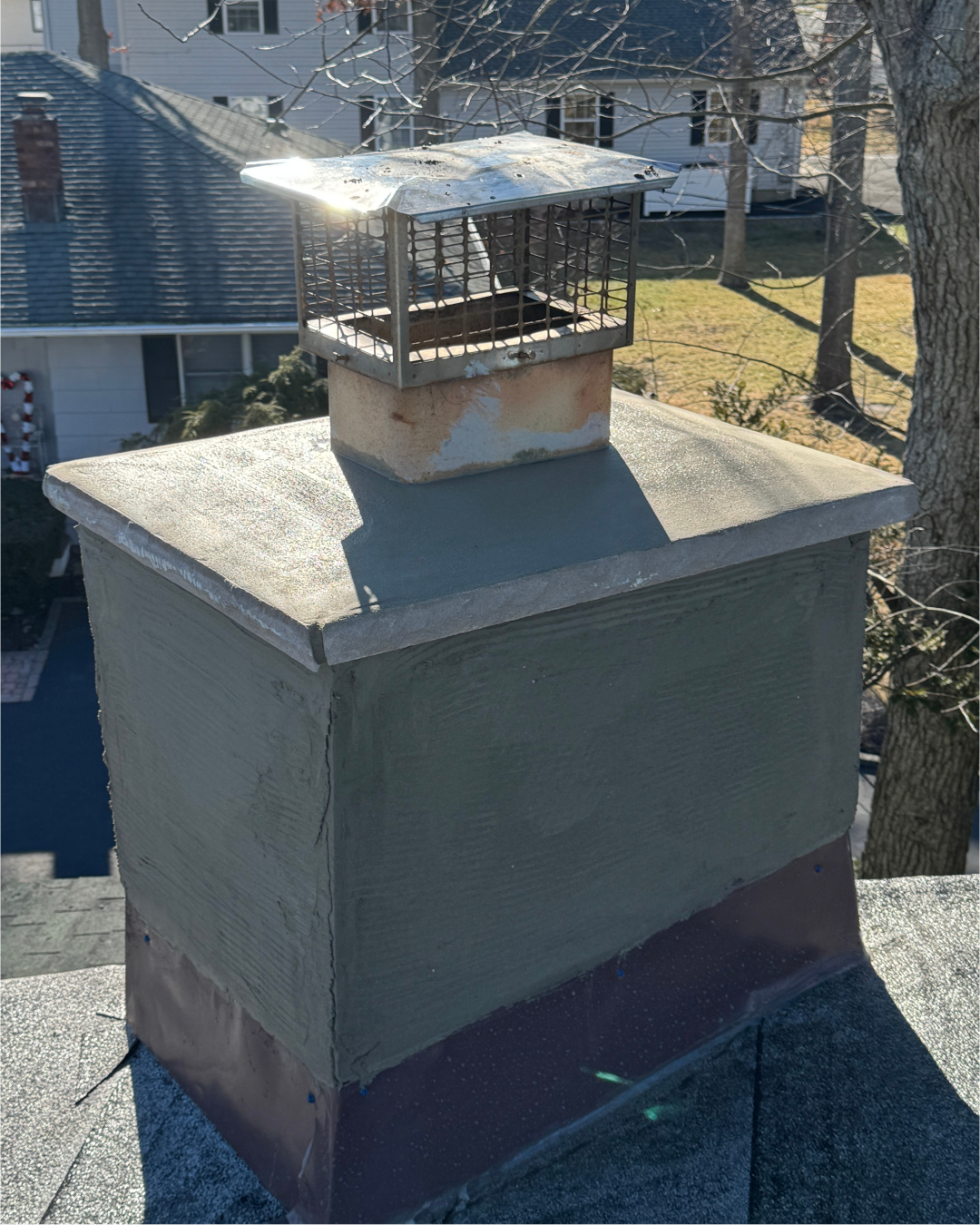
Chimney cap and termination area
Chase cover on applicable chimney systems
Accessible flashing and roofline conditions
Appliance connectors and accessible venting components
Evidence of water entry or staining
Masonry cracks, missing mortar, or deterioration
Obstructions or combustible deposits
Visible damage or signs of a previous chimney fire
Clearances and construction concerns within the inspection scope
Conditions that may require cleaning, maintenance, repair, or further evaluation
Firebox and visible fireplace components
Damper and accessible smoke chamber areas
Chimney flue and liner
Accessible portions of the chimney structure
Chimney crown or wash
Chimney cap and termination area
Chase cover on applicable chimney systems
Accessible flashing and roofline conditions
Appliance connectors and accessible venting components
Evidence of water entry or staining
Masonry cracks, missing mortar, or deterioration
Obstructions or combustible deposits
Visible damage or signs of a previous chimney fire
Clearances and construction concerns within the inspection scope
Conditions that may require cleaning, maintenance, repair, or further evaluation
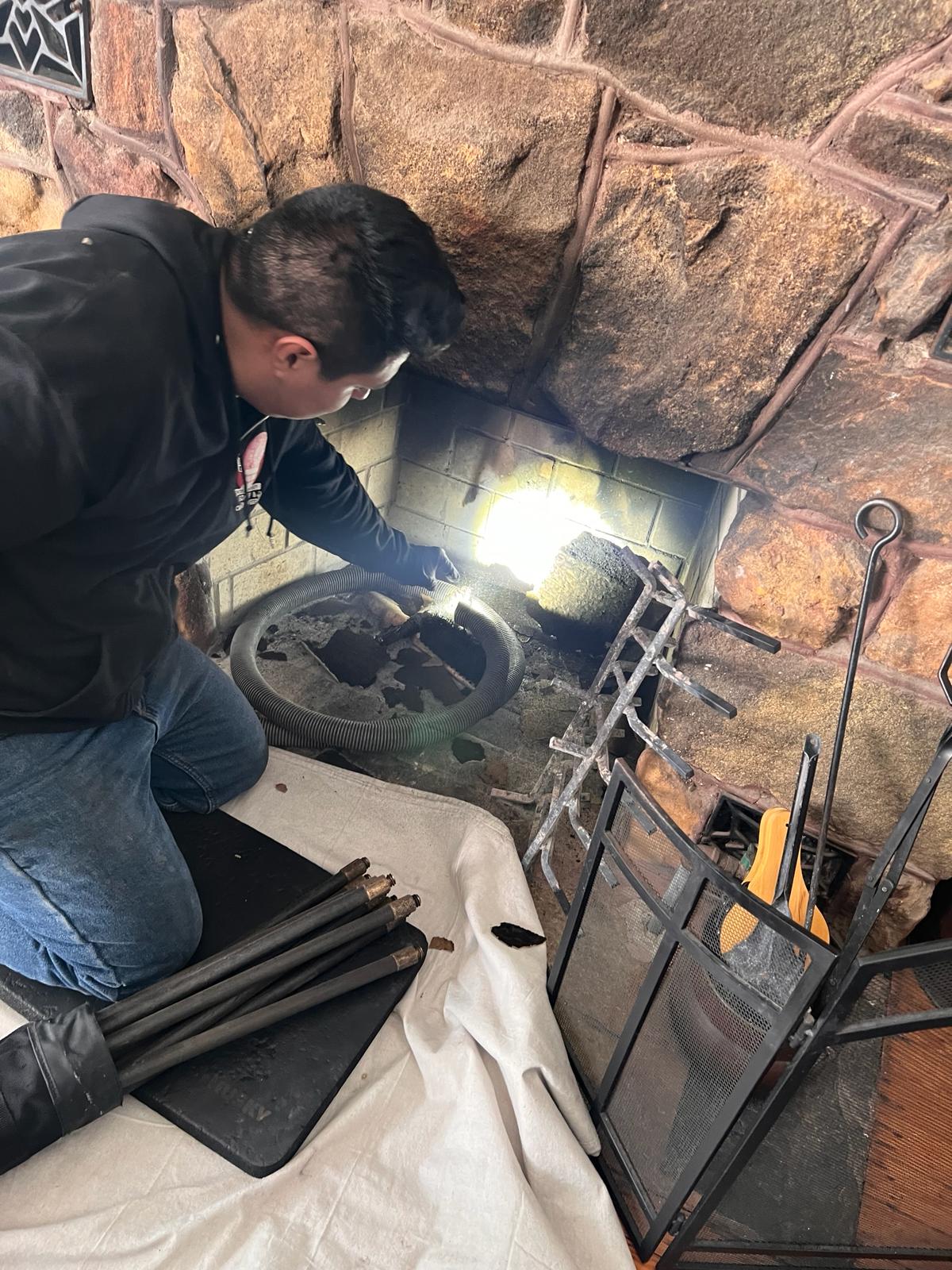
An inspection evaluates conditions that are accessible and observable within its defined scope at the time of the appointment. Access limitations and areas that cannot be evaluated should be documented or explained.
Chimney Inspection and Chimney Cleaning Are Different Services
A chimney inspection evaluates the condition and accessible components of the system. Chimney cleaning removes soot, creosote, and certain debris when cleaning is needed.
A routine chimney cleaning may include a Level 1 inspection, but scheduling an inspection does not automatically include cleaning. We will explain what is included before your appointment.
When Should You Schedule a Chimney Inspection?
An inspection is useful before a problem becomes an emergency, but certain changes and warning signs make professional evaluation especially important.
It is time for the chimney’s annual evaluation
You recently purchased a home
You are preparing to sell a property
The chimney has not been inspected for an extended period
You are installing or changing a fireplace, stove, insert, or appliance
The fuel type or venting configuration is changing
You experienced a chimney fire or building fire
A storm, falling limb, impact, or construction may have caused damage
It is time for the chimney’s annual evaluation
You recently purchased a home
You are preparing to sell a property
The chimney has not been inspected for an extended period
You are installing or changing a fireplace, stove, insert, or appliance
The fuel type or venting configuration is changing
You experienced a chimney fire or building fire
A storm, falling limb, impact, or construction may have caused damage
You notice unusual smoke behavior or odors
You see cracked masonry, missing mortar, staining, rust, or water entry
Pieces of flue tile or masonry have fallen into the fireplace
An insurer, buyer, attorney, or municipality requested documentation
You want to understand the system before approving repairs or relining
You notice unusual smoke behavior or odors
You see cracked masonry, missing mortar, staining, rust, or water entry
Pieces of flue tile or masonry have fallen into the fireplace
An insurer, buyer, attorney, or municipality requested documentation
You want to understand the system before approving repairs or relining
Requirements for property transfers, rental certificates, municipal approvals, and insurance documentation can vary. Confirm the exact inspection or documentation being requested before scheduling.
Requirements for property transfers, rental certificates, municipal approvals, and insurance documentation can vary. Confirm the exact inspection or documentation being requested before scheduling.
What to expect from our chimney inspection process
Step 1: We Learn Why You Need the Inspection
We ask about the chimney’s use, appliance, property history, known symptoms, planned changes, and any request from a buyer, municipality, insurer, or other party.
Step 2: We Evaluate the System
A trained professional evaluates the components included in the selected inspection level, subject to accessibility, system design, site conditions, weather, and safety.
Step 3: We Explain the Findings
We identify observed conditions and explain what they mean. When applicable, findings may be supported with photographs, video-scan images, or written documentation.
Step 4: We Recommend the Next Step
If cleaning, monitoring, maintenance, repair, relining, or further evaluation is recommended, we explain why and help you understand the priority.
What to expect from our chimney inspection process
Step 1: We Learn Why You Need the Inspection
We ask about the chimney’s use, appliance, property history, known symptoms, planned changes, and any request from a buyer, municipality, insurer, or other party.
Step 2: We Evaluate the System
A trained professional evaluates the components included in the selected inspection level, subject to accessibility, system design, site conditions, weather, and safety.
Step 3: We Explain the Findings
We identify observed conditions and explain what they mean. When applicable, findings may be supported with photographs, video-scan images, or written documentation.
Step 4: We Recommend the Next Step
If cleaning, monitoring, maintenance, repair, relining, or further evaluation is recommended, we explain why and help you understand the priority.
Get Clear Answers Before You Use, Buy, Sell, or Modify a Chimney System
Call Central Jersey Masonry & Chimney Sweeps to discuss your property and schedule the appropriate chimney inspection.
Get Clear Answers Before You Use, Buy, Sell, or Modify a Chimney System
Call Central Jersey Masonry & Chimney Sweeps to discuss your property and schedule the appropriate chimney inspection.

Local Chimney Experience Matters
Central Jersey chimneys are exposed to seasonal temperature changes, wind-driven rain, coastal moisture in shore communities, and repeated freeze-thaw cycles. These conditions can contribute to masonry deterioration, crown and cap problems, rusted components, flashing concerns, and water entry.
A professional inspection helps identify the observable conditions affecting an individual chimney instead of assuming every system has the same problem.
Why Central Jersey Homeowners Choose Our Team
Central Jersey Masonry & Chimney Sweeps has served the region since 1996. Led by owner and president Mike Palmieri, our fully licensed and insured company combines inspection knowledge with hands-on experience in chimney cleaning, venting, leak investigation, masonry repair, relining, fireplace work, and chimney restoration.
Our goal is to help property owners understand the observable condition of their system, why a finding matters, and what should happen next.
CSIA-certified chimney inspectors
Serving Central Jersey since 1996
Fully licensed and insured
Experience with masonry and factory-built chimney systems
Clear explanations of observed conditions
Inspection, cleaning, leak investigation, repair, and restoration capabilities
Service for routine maintenance, property transactions, and suspected damage
Why Central Jersey Homeowners Choose Our Team
Central Jersey Masonry & Chimney Sweeps has served the region since 1996. Led by owner and president Mike Palmieri, our fully licensed and insured company combines inspection knowledge with hands-on experience in chimney cleaning, venting, leak investigation, masonry repair, relining, fireplace work, and chimney restoration.
Our goal is to help property owners understand the observable condition of their system, why a finding matters, and what should happen next.
CSIA-certified chimney inspectors
Serving Central Jersey since 1996
Fully licensed and insured
Experience with masonry and factory-built chimney systems
Clear explanations of observed conditions
Inspection, cleaning, leak investigation, repair, and restoration capabilities
Service for routine maintenance, property transactions, and suspected damage
Chimney Inspection Service Areas in Central Jersey
We provide professional chimney inspections throughout Monmouth County, Ocean County, Middlesex County, and Somerset County, with availability in select Burlington County communities.
Monmouth County
Howell, Freehold, Farmingdale, Colts Neck, Manalapan, Marlboro, Middletown, Red Bank, Holmdel, Wall Township, Tinton Falls, Long Branch, and surrounding communities.
Ocean County
Brick, Toms River, Jackson, Point Pleasant, Manchester, Lacey, Barnegat, Stafford, Bayville, and surrounding communities.
Middlesex County
Old Bridge, East Brunswick, Edison, Monroe, Woodbridge, Sayreville, Piscataway, North Brunswick, South Brunswick, Metuchen, and surrounding communities.
Somerset County
Bridgewater, Hillsborough, Warren, Somerville, Bernardsville, Montgomery, Green Brook, Watchung, and surrounding communities.
Burlington County
Service is available in select Burlington County communities. Please call to confirm availability for your address.
STILL NOT SURE?
Frequently Asked Questions
Frequently Asked Questions
How often should a chimney be inspected?
An annual professional inspection is generally recommended, even when a chimney is not used frequently. An additional inspection may be appropriate after a fire, severe weather event, malfunction, property transfer, extended period without use, or change to the appliance, or venting system.
What is the difference between a Level 1 and Level 2 chimney inspection?
A Level 1 inspection is generally used for routine annual evaluation when the system and its use have not changed. A Level 2 inspection has a broader scope, includes additional accessible areas, and includes video scanning or a similar inspection of the flue interior when accessible.
Level 2 is commonly appropriate for property transfers, appliance changes, relining, suspected damage, and certain system malfunctions.
Does a Level 2 chimney inspection include a camera scan?
A Level 2 inspection includes video scanning, or a similar inspection method, of the chimney interior when the flue is accessible. If the size, offsets, condition, or accessibility of the system prevents a complete scan, that limitation should be noted.
Is chimney cleaning included with an inspection?
Not automatically. Inspection and cleaning are different services. A routine chimney cleaning may include a Level 1 inspection, while a standalone or Level 2 inspection may be scheduled separately. We will explain what is included before your appointment.
Do I need an inspection when buying or selling a home?
A Level 2 inspection is commonly recommended when a property is sold or transferred. The exact inspection or documentation required may also depend on the municipality, transaction, insurer, lender, attorney, or other requesting party.
Ask what documentation is required before scheduling so the correct service can be arranged.
How long does a chimney inspection take?
The time required depends on the inspection level, number of fireplaces and flues, system type, accessibility, roof and weather conditions, and whether video scanning is needed. Our office can provide a better expectation after learning about the property.
How much does a chimney inspection cost?
The cost depends on the inspection level, number of fireplaces or flues, system configuration, property location, accessibility, and requested documentation. Contact our office with information about your property so we can provide the appropriate service and pricing.
Can you inspect a fireplace that has not been used in years?
Yes. A long period without use is a good reason to have the chimney and fireplace evaluated before use. Tell us how long the system has been inactive and whether renovations, leaks, appliance changes, or known damage occurred during that time.
Can you inspect a chimney connected to a gas or a furnace?
The appropriate inspection depends on the appliance, fuel, venting configuration, and purpose of the inspection. Tell our office which appliance is connected to the chimney so we can confirm the appropriate service.
What happens if the inspector finds a problem?
We explain the observable condition, why it matters, and the recommended next step. Depending on the finding, that may involve cleaning, monitoring, repair, relining, leak investigation, additional access, another qualified specialist, or confirmation from the local authority.
How should I prepare for the appointment?
Keep the fireplace or appliance out of use for the period our office specifies, provide reasonable access around it, secure pets, and tell us about known leaks, odors, smoke problems, fires, repairs, or appliance changes.
If you received a document request from a municipality, buyer, insurer, or attorney, have it available when scheduling.
How often should a chimney be inspected?
An annual professional inspection is generally recommended, even when a chimney is not used frequently. An additional inspection may be appropriate after a fire, severe weather event, malfunction, property transfer, extended period without use, or change to the appliance, or venting system.
What is the difference between a Level 1 and Level 2 chimney inspection?
A Level 1 inspection is generally used for routine annual evaluation when the system and its use have not changed. A Level 2 inspection has a broader scope, includes additional accessible areas, and includes video scanning or a similar inspection of the flue interior when accessible.
Level 2 is commonly appropriate for property transfers, appliance changes, relining, suspected damage, and certain system malfunctions.
Does a Level 2 chimney inspection include a camera scan?
A Level 2 inspection includes video scanning, or a similar inspection method, of the chimney interior when the flue is accessible. If the size, offsets, condition, or accessibility of the system prevents a complete scan, that limitation should be noted.
Is chimney cleaning included with an inspection?
Not automatically. Inspection and cleaning are different services. A routine chimney cleaning may include a Level 1 inspection, while a standalone or Level 2 inspection may be scheduled separately. We will explain what is included before your appointment.
Do I need an inspection when buying or selling a home?
A Level 2 inspection is commonly recommended when a property is sold or transferred. The exact inspection or documentation required may also depend on the municipality, transaction, insurer, lender, attorney, or other requesting party.
Ask what documentation is required before scheduling so the correct service can be arranged.
How long does a chimney inspection take?
The time required depends on the inspection level, number of fireplaces and flues, system type, accessibility, roof and weather conditions, and whether video scanning is needed. Our office can provide a better expectation after learning about the property.
How much does a chimney inspection cost?
The cost depends on the inspection level, number of fireplaces or flues, system configuration, property location, accessibility, and requested documentation. Contact our office with information about your property so we can provide the appropriate service and pricing.
Can you inspect a fireplace that has not been used in years?
Yes. A long period without use is a good reason to have the chimney and fireplace evaluated before use. Tell us how long the system has been inactive and whether renovations, leaks, appliance changes, or known damage occurred during that time.
Can you inspect a chimney connected to a gas or a furnace?
The appropriate inspection depends on the appliance, fuel, venting configuration, and purpose of the inspection. Tell our office which appliance is connected to the chimney so we can confirm the appropriate service.
What happens if the inspector finds a problem?
We explain the observable condition, why it matters, and the recommended next step. Depending on the finding, that may involve cleaning, monitoring, repair, relining, leak investigation, additional access, another qualified specialist, or confirmation from the local authority.
How should I prepare for the appointment?
Keep the fireplace or appliance out of use for the period our office specifies, provide reasonable access around it, secure pets, and tell us about known leaks, odors, smoke problems, fires, repairs, or appliance changes.
If you received a document request from a municipality, buyer, insurer, or attorney, have it available when scheduling.
Schedule a Professional Chimney Inspection in Central Jersey
Whether you need a routine annual evaluation, a Level 2 inspection for a property transaction, or answers after a leak, malfunction, or system change, Central Jersey Masonry & Chimney Sweeps can help you start with the appropriate inspection.
Call Central Jersey Masonry and Chimney Sweeps Today
📍 Serving Monmouth County, NJ & more!



QUICK LINKS
Home
Services
About Us
Reviews
FAQs
GET INT TOUCH


GET INT TOUCH